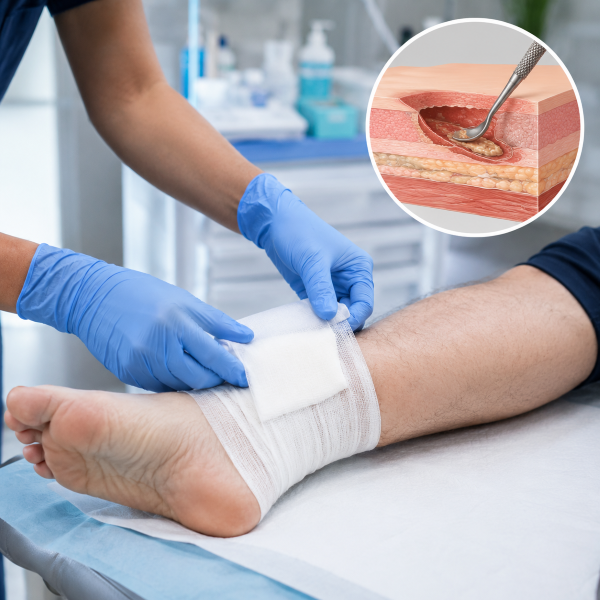
Wound Debridement
Wounds that do not heal properly may develop dead tissue, infection, or damaged areas that delay the natural healing process. Wound debridement is a specialised procedure used to remove unhealthy or non-viable tissue from a wound, allowing healthy tissue to grow and supporting better recovery.
This treatment may be required for wounds caused by injuries, infections, pressure sores, diabetic ulcers, or surgical complications. Early assessment and proper wound management help reduce the risk of infection and promote effective healing.
When Is Wound Debridement Required?
A doctor may recommend wound debridement if you notice:
- Presence of dead or damaged tissue in a wound
- Wounds that are slow to heal
- Signs of infection such as redness, swelling, or discharge
- Persistent pain or worsening wound condition
- Non-healing wounds due to underlying health conditions
Assessment & Wound Cleaning Process
A detailed evaluation is performed to understand the depth, severity, and condition of the wound. Based on the wound type and tissue damage, the appropriate debridement method is selected.
During the procedure, unhealthy tissue is carefully removed to clean the wound area and create a healthier environment for healing. Depending on the condition, debridement may be performed using surgical techniques or other specialised methods.
Healing After Wound Debridement
After the procedure, proper wound dressing, hygiene, and follow-up care play an important role in recovery. Removing damaged tissue helps improve healing and allows the wound to gradually repair itself.
Recovery time depends on the size, location, and severity of the wound along with the patient's overall health condition.
Advanced Wound Care by Dr. Aparna Venugopal
Dr. Aparna Venugopal provides expert evaluation and surgical wound care with a focus on effective wound management, infection prevention, patient comfort, and improved healing outcomes.