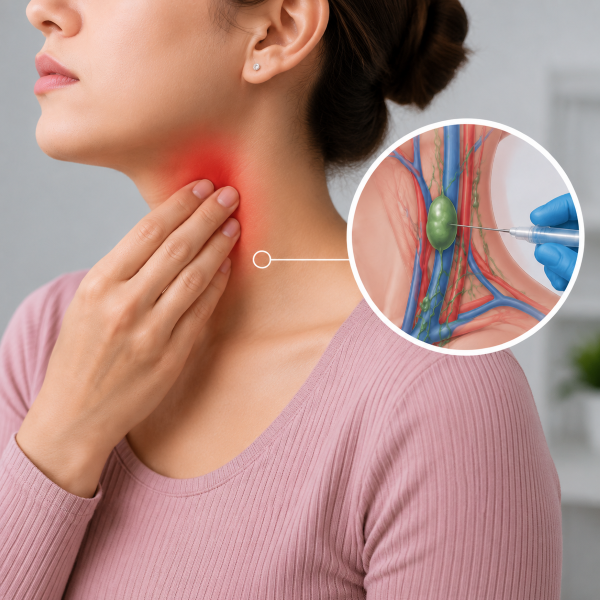
Lymph Node Biopsy
Lymph nodes are small structures of the immune system that help the body fight infections and filter harmful substances. Sometimes, changes in the size, shape, or behaviour of a lymph node may require further evaluation to identify the underlying cause.
A lymph node biopsy is a diagnostic procedure performed to examine lymph node tissue under a microscope. It helps doctors understand whether the enlargement is due to infections, inflammation, or other medical conditions and supports accurate treatment planning.
When Is a Lymph Node Biopsy Recommended?
A doctor may advise a biopsy if you notice:
- Persistent swelling or enlargement of lymph nodes
- Lymph nodes that continue to grow in size
- Unexplained lumps in the neck, armpit, or groin area
- Associated symptoms such as fever, night sweats, or unexplained weight loss
- Abnormal findings on imaging tests
Understanding the Biopsy Procedure
During a lymph node biopsy, a small sample of tissue is carefully removed from the affected lymph node and sent for laboratory analysis. The procedure may involve removing part or the entire lymph node, depending on the clinical requirement.
The biopsy results help determine the nature of the lymph node changes and guide further treatment decisions.
Recovery After Lymph Node Biopsy
Lymph node biopsy is generally a safe procedure performed with appropriate precautions. Most patients experience minimal discomfort and can return to routine activities after recovery, depending on the type of biopsy performed.
Expert Surgical Care by Dr. Aparna Venugopal
Dr. Aparna Venugopal provides careful evaluation and surgical management for conditions requiring lymph node biopsy, focusing on accurate diagnosis, patient safety, comfort, and personalised treatment planning.